
Learn how top traders trade objectively without letting their self-worth depend on their net worth. Master emotional detachment and logical decision-making. You’ve just taken a trade. Your heart races, palms sweat, and your eyes stay glued to the screen. Every tick feels like a personal judgment of your worth.
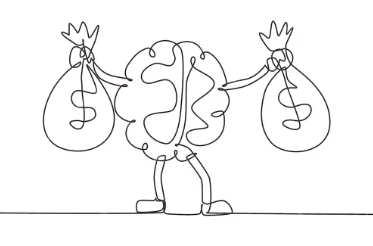
Sound familiar?
For thousands of Indian traders, especially those transitioning from salaried jobs or side hustling their way into full-time trading, this emotional rollercoaster is all too real. But here’s the truth no one tells you early on:
The winning trader doesn’t trade for ego. They trade for execution.
Their identity isn’t at stake. Only money is.
And that mental shift? That’s where the real game changes.
🎯 Why Detaching Your Identity From Trades is Crucial
Trading is the one profession where your self-image can destroy your performance. Unlike a job where consistent effort yields results, in trading:
“Even the best decisions can lead to bad outcomes — and vice versa.”
If you equate a winning trade with being smart and a losing trade with being a failure, you’re walking into an emotional minefield. And in India, where providing for family, societal image, and career success define identity, this becomes even more toxic.
Let’s take Ravi’s example:
Ravi, 38, from Pune, quit his IT job to trade full-time. First three months went well. Then a string of losses hit. Instead of reviewing trades, he spiraled into self-doubt. He stopped socializing, felt like a failure, and overleveraged to “win back” his respect — losing even more.
What went wrong?
He let his net worth dictate his self-worth.
He made every loss a personal loss — and that’s a trap most traders fall into.
🧠 H2: Emotional Attachment Is Your Enemy in Trading
When money = survival, identity, respect… you stop making decisions from logic and start reacting from fear or ego.
How Emotional Attachment Impacts You:
- You avoid exiting losing trades — “I can’t be wrong.”
- You chase trades — “I need to prove I’m good.”
- You revenge trade — “I must win this back.”
- You ignore risk — “This one has to work.”
And here’s the paradox:
“You perform best when the outcome doesn’t define you.”
But for most Indian traders — the outcome does matter. It pays rent, school fees, and EMI.
So how do you trade logically when your emotions are screaming louder than your strategy?
🧘♂️ H2: Develop a Spock-Like Trading Mindset (Yes, from Star Trek)
Imagine a Vulcan from Star Trek, emotionless and logical. That’s what successful traders try to emulate.
Traits of a Spock-like Trader:
- Detachment: They don’t celebrate wins too much or mourn losses.
- Clarity: They follow data, not gut.
- Discipline: They execute plans, not hopes.
- Objectivity: They don’t let ego interfere with exits or entries.
How to Build This Mindset:
- Stop Trading for Validation
You’re not here to prove you’re intelligent, gutsy, or alpha. You’re here to manage risk and grow capital — that’s it. - Start Tracking Process Over Outcomes
Did you follow your system? Did you honor your stop loss? Celebrate that. - Journal Trades and Emotions
Capture not just what you traded, but how you felt. Patterns will emerge.
“You don’t rise to your strategy. You fall to your discipline.”
💼 H2: Trade Like Your Survival Doesn’t Depend on It (Even if It Does)
Real Talk:
For many in India, trading is not a side hustle — it’s the hustle. You may be feeding your family or building a career. So how do you pretend like losses don’t matter?
You prepare like they don’t.
Here’s how:
🔒 1. Manage Risk Like a Bodyguard
- Never risk more than 1–2% of your capital on a trade.
- Use position sizing to your psychological comfort.
- Have a daily stop-loss cap. Stop if you hit it.
“The less you risk per trade, the freer you become to trade clearly.”
💰 2. Have Other Sources of Income
This is underrated. Rent from property, freelancing, teaching — anything that reduces emotional dependence on the trade outcome.
🎯 3. Trade With ‘Meaningless’ Money
Use capital you can afford to lose — even if it’s small. The goal is emotional neutrality, not size.
🧬 H2: Diversify Your Identity Beyond “Trader”
This is the big psychological shift. If being a trader is your only source of confidence, then every red candle feels like a character assassination.
“If you see yourself only as a trader, every loss feels like a personal failure.”
Build a Multi-Faceted Self-Identity:
- A parent who teaches values
- A spouse who supports dreams
- A friend who adds joy
- A citizen who contributes
- A student who learns
Let your self-worth come from who you are, not what you earn.
🔁 H2: Common Mindset Mistakes Indian Traders Make
Here are traps that Indian learners fall into, especially in the first 1–2 years:
❌ Mistake 1: “This trade must work, or I’m done.”
- Emotional blackmailing yourself
- Leads to overtrading, big bets
❌ Mistake 2: Linking P&L to pride or shame
- Leads to hiding losses
- Avoiding reviews
❌ Mistake 3: Taking wins personally
- Leads to overconfidence
- Breaking rules in the next trade
❌ Mistake 4: No psychological risk management
- Focus only on technicals
- Ignore emotions
🧠 H3: What You Should Remember
✅ Winning traders don’t tie identity to outcomes
✅ Emotional detachment improves performance
✅ Risk management creates safety
✅ Multiple self-roles build resilience
✅ Spock-like mindset isn’t inhuman — it’s trained
🌱 H2: Actionable Steps to Train Detachment
Here’s what you can implement from tomorrow:
🗓️ Daily:
- Start day with an affirmation: “I am not my trades.”
- Journal pre-trade emotions
- Use fixed position size
📈 Weekly:
- Review trades for execution, not outcome
- Identify emotional triggers
- Share reviews with a trading buddy
📚 Monthly:
- Take one day off trading to reflect
- Read a mindset book (like Trading in the Zone)
- Celebrate non-P&L wins (discipline, patience)
🔊 H2: A Mentor’s Final Word
You don’t need to be emotionless.
You need to be emotionally aware, yet strategically disciplined.
Every Indian trader comes from a background where money has meaning — for family, status, survival.
But here’s the paradox:
The less you care about the outcome, the better your outcomes become.
So don’t strive to win every trade.
Strive to become the kind of person who can trade without needing to win.That’s the real win.


Leave a Reply to Sumasree Cancel reply